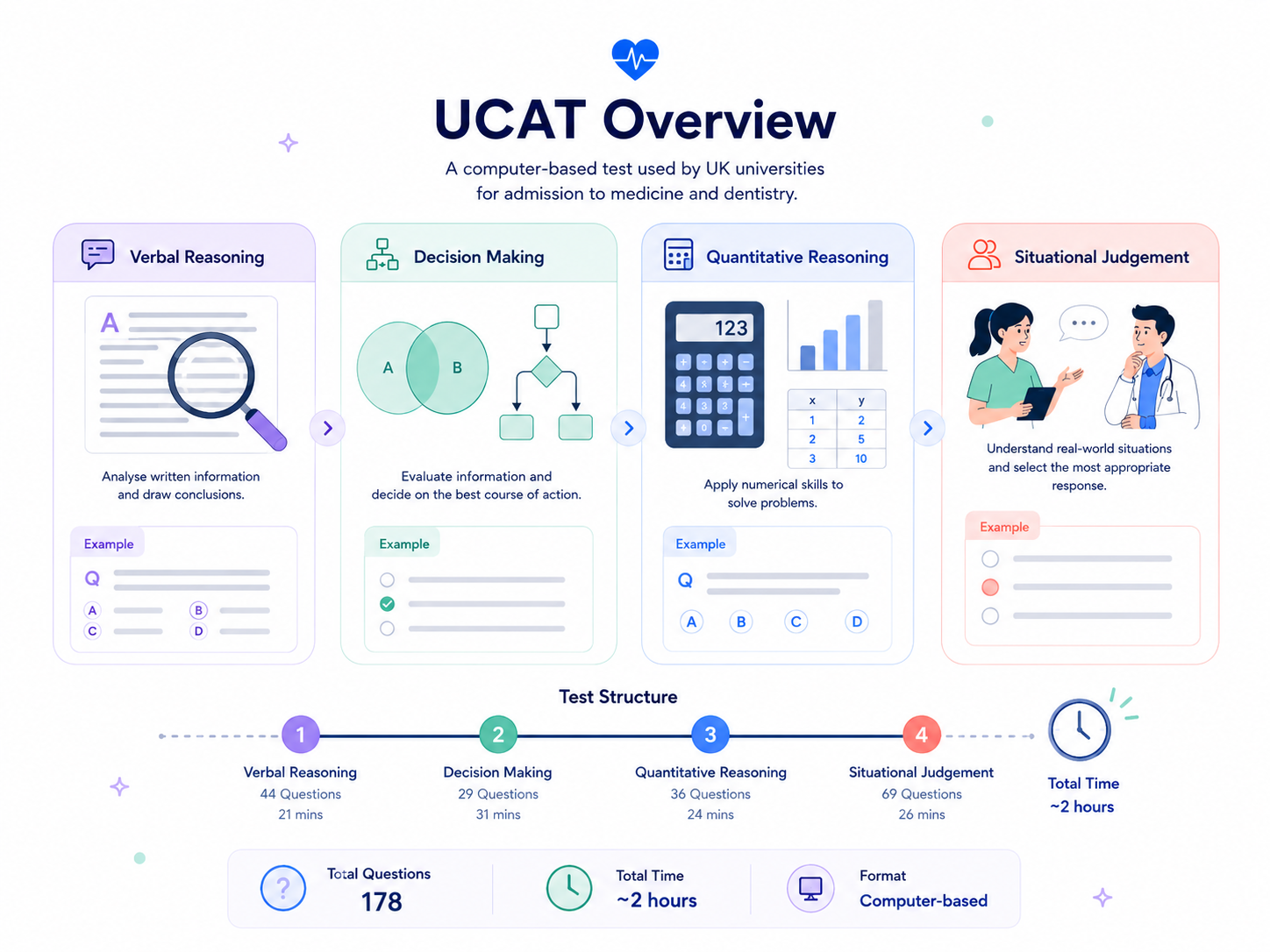
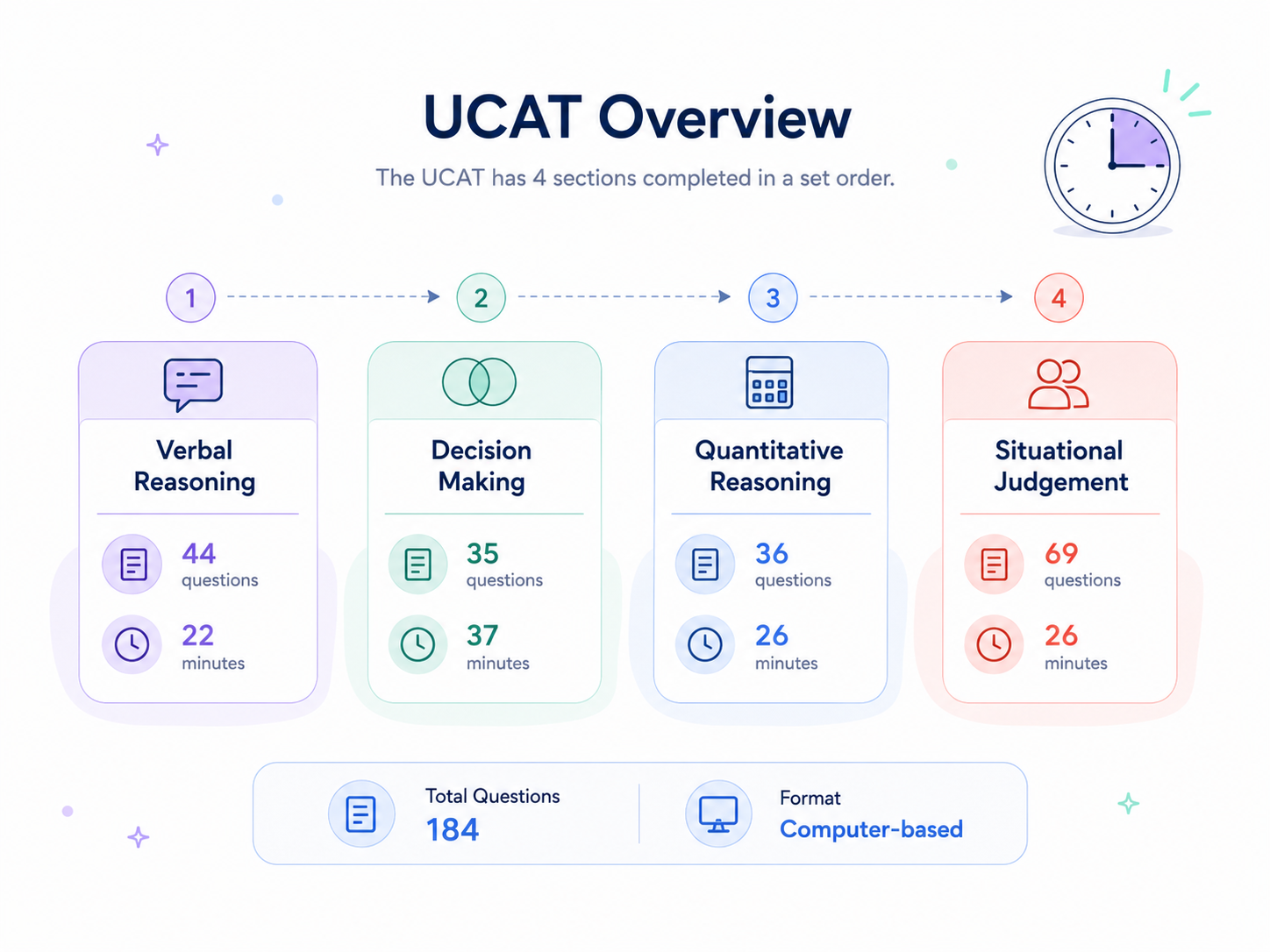
Most UCAT students do not struggle because they are incapable. They struggle because they make the same avoidable mistakes again and again. The good news is that once you can spot these mistakes, you can start fixing them.
One very common mistake is doing lots of practice but not reviewing it properly. It is easy to feel productive when you complete a big set of questions, but if you do not stop and ask why you got things wrong, your improvement will be slower than it should be.
Another mistake is focusing only on your favourite section. Many students naturally spend more time on the area they enjoy and avoid the one that feels uncomfortable. That feels better in the short term, but it usually leaves a clear weakness in your overall profile.
Verbal Reasoning
a major mistake is using outside knowledge instead of the passage. Students often choose answers that sound true in real life, even though the passage does not support them.

Decision Making
a common mistake is jumping to conclusions too quickly. Students sometimes see what seems like an obvious pattern and pick an answer before properly testing the logic.

Quantitative Reasoning
students often rush the reading stage. They start calculating before they are fully clear on what the question is asking. That leads to wasted time and avoidable errors.

Situational Judgement
a typical mistake is choosing the nicest-sounding answer instead of the most appropriate one. Safe, honest and proportionate thinking matters more than simply sounding kind.

Another big mistake across the whole exam is poor timing behaviour. Some students get stuck on one question for too long because they want to “beat it”. In the UCAT, that can cost several marks elsewhere. Sometimes the smartest move is to answer as well as you can, flag it mentally and move on.
Students also often make the mistake of panicking after a bad session. One poor practice set does not mean you are doomed. The UCAT has good days and bad days. Improvement is rarely perfectly smooth. What matters is the trend over time.
Finally, many students underestimate the importance of mindset. If every hard question makes you think “I am awful at this”, your concentration drops and your performance often drops with it. A calmer mindset helps you think more clearly.
If you want to avoid the most common UCAT mistakes, focus on these habits:
- review mistakes properly
- practise all four sections
- use evidence, not assumptions
- understand the question before answering
- move on when needed
- stay calm after setbacks
Avoiding mistakes is not about becoming perfect. It is about becoming more aware. Once you know what keeps going wrong, you can start changing it. That is when practice turns into progress.