If you are thinking about applying for medicine or dentistry, you have probably heard people talk about the UCAT. At first, it can sound confusing and a bit intimidating, especially if everyone around you seems to know what it is already. The good news is that once you break it down, the UCAT is much easier to understand.
The UCAT stands for the University Clinical Aptitude Test. It is an admissions test used by many universities in the UK when they choose students for medicine and dentistry. In simple terms, it helps universities look at skills that matter for healthcare courses, such as reasoning, problem solving, decision making and judgement.
The UCAT is not the same as an A-level exam. It does not test how well you can remember huge amounts of science content. Instead, it looks at how you think. That means you can still do very well even if you do not feel like a “natural genius”. Strong UCAT preparation usually comes down to learning the question types, practising regularly and reviewing your mistakes properly.
One of the biggest mistakes beginners make is assuming the UCAT is one single style of exam. It is actually made up of four different sections. Each one tests a different skill, and each one feels slightly different when you are answering questions.
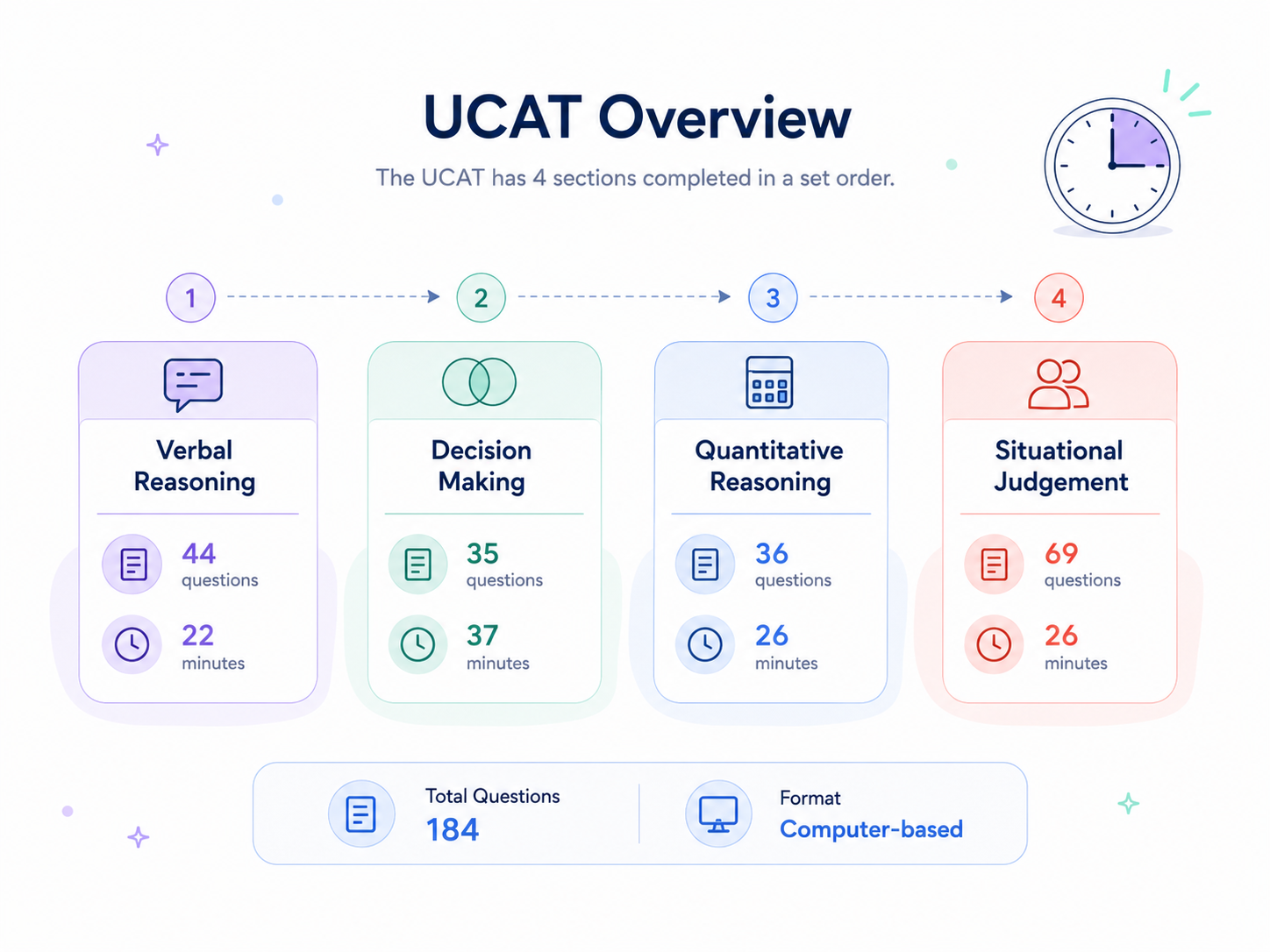
The Four UCAT Sections
Verbal Reasoning
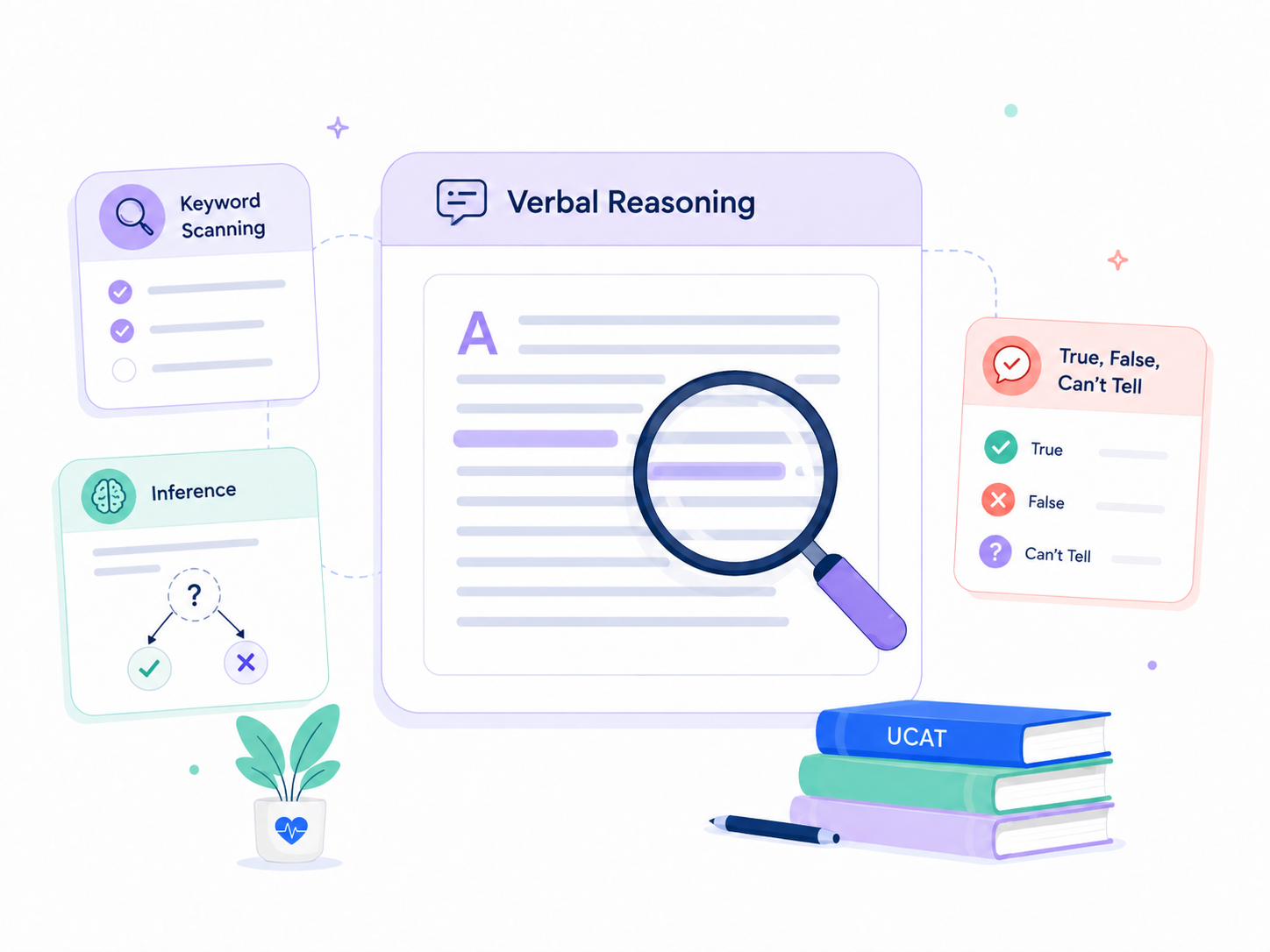
This section tests how well you can read short passages and work out what the information means. You may need to spot key details, identify the main idea or decide whether a statement is true, false or impossible to tell from the text.
Decision Making
This section is about logic. You might see Venn diagrams, probability, arguments, syllogisms or puzzle-style questions. It is not really about memorising facts. It is about using the information in front of you and making careful, sensible choices.
Quantitative Reasoning
This is the maths-based section. It includes tables, charts, percentages, ratios and other data questions. You do not need advanced maths, but you do need to be comfortable using basic number skills quickly and accurately.
Situational Judgement
This section looks at how you respond to realistic situations, especially ones linked to healthcare, teamwork, professionalism and communication. It is less about getting stuck into calculations and more about judging what would be sensible, safe and appropriate.
So, who needs to take the UCAT? If you are applying to a university course that asks for it, you will need to sit the test before you send off your final application decisions. Not every university uses the UCAT in exactly the same way, but many do use it as part of the admissions process.
People also often ask whether the UCAT is hard. The honest answer is that it can feel challenging, especially because it is timed. But “hard” does not mean impossible. Most students improve a lot once they understand the format. The first few practice sessions can feel rough, but that is normal. UCAT improvement tends to come from familiarity, not magic.
Another common question is when to start preparing. In general, it is best to start early enough that you do not feel rushed, but not so early that you burn out. A focused period of steady work is usually much better than months of half-hearted revision. A clear plan, regular question practice and proper review matter far more than panicky last-minute cramming.

Putting It Into Practice
If you are just starting out, your first step should be to understand the exam and get used to the different sections. Then you can begin building a study routine. The aim is not to become perfect straight away. The aim is to get a little more comfortable, a little faster and a little more accurate each week.
The UCAT can play an important role in your application, but it does not have to feel impossible. Once you understand what it is testing and how the paper is structured, you are already in a much better position.
If you want a simple next step, start by learning the four sections, trying a few questions from each one and noting which areas feel strongest and weakest. That will give you a clear foundation for the rest of your preparation.