Is the UCAT an intelligence test?
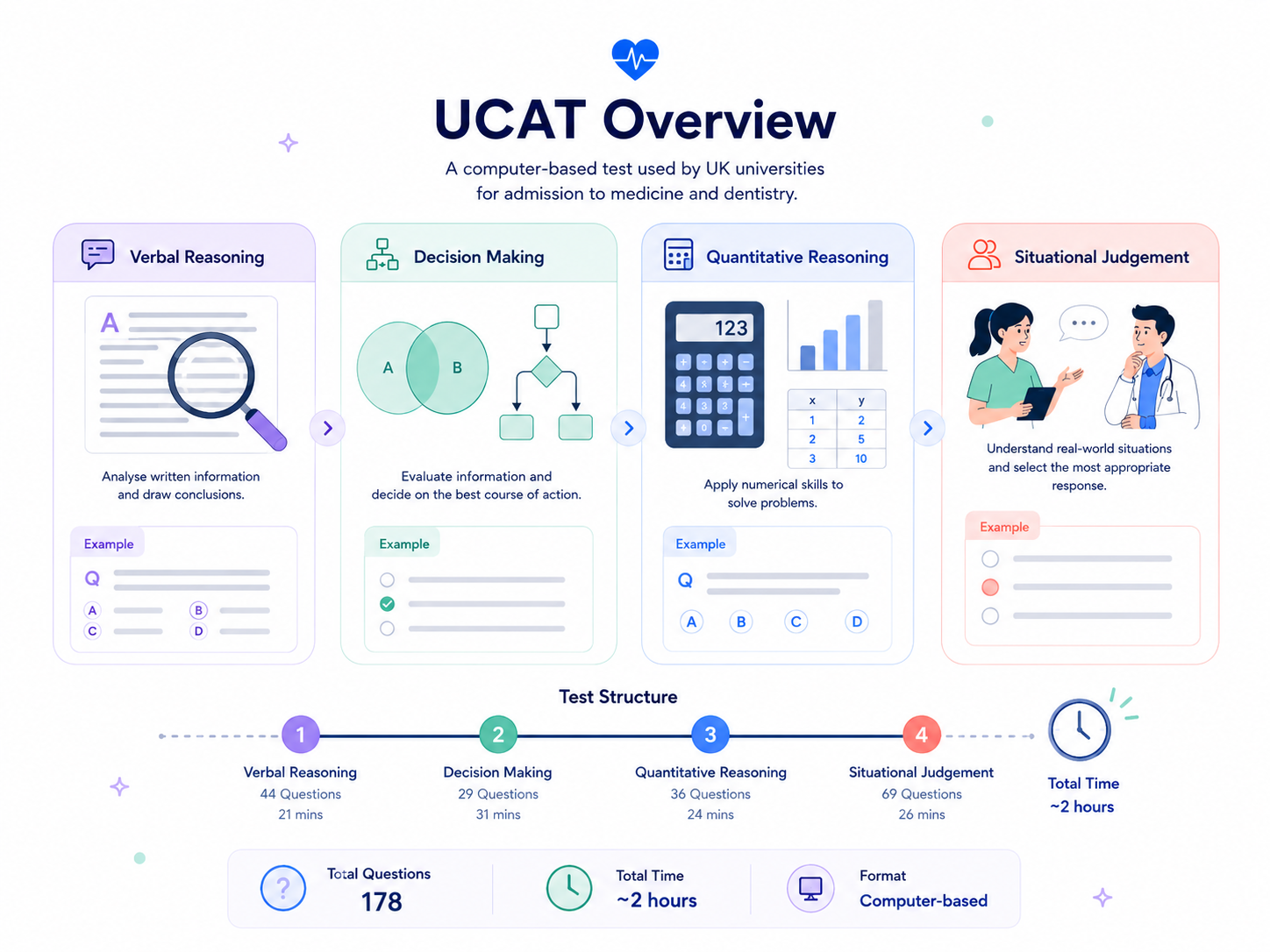
Not exactly. It tests reasoning, problem solving and judgement under time pressure. Preparation can make a substantial difference.
Do I need to know biology or chemistry for the UCAT?
The cognitive sections are not designed as science knowledge tests. You should focus on the reasoning skills required by each section.
Is the UCAT all multiple choice?
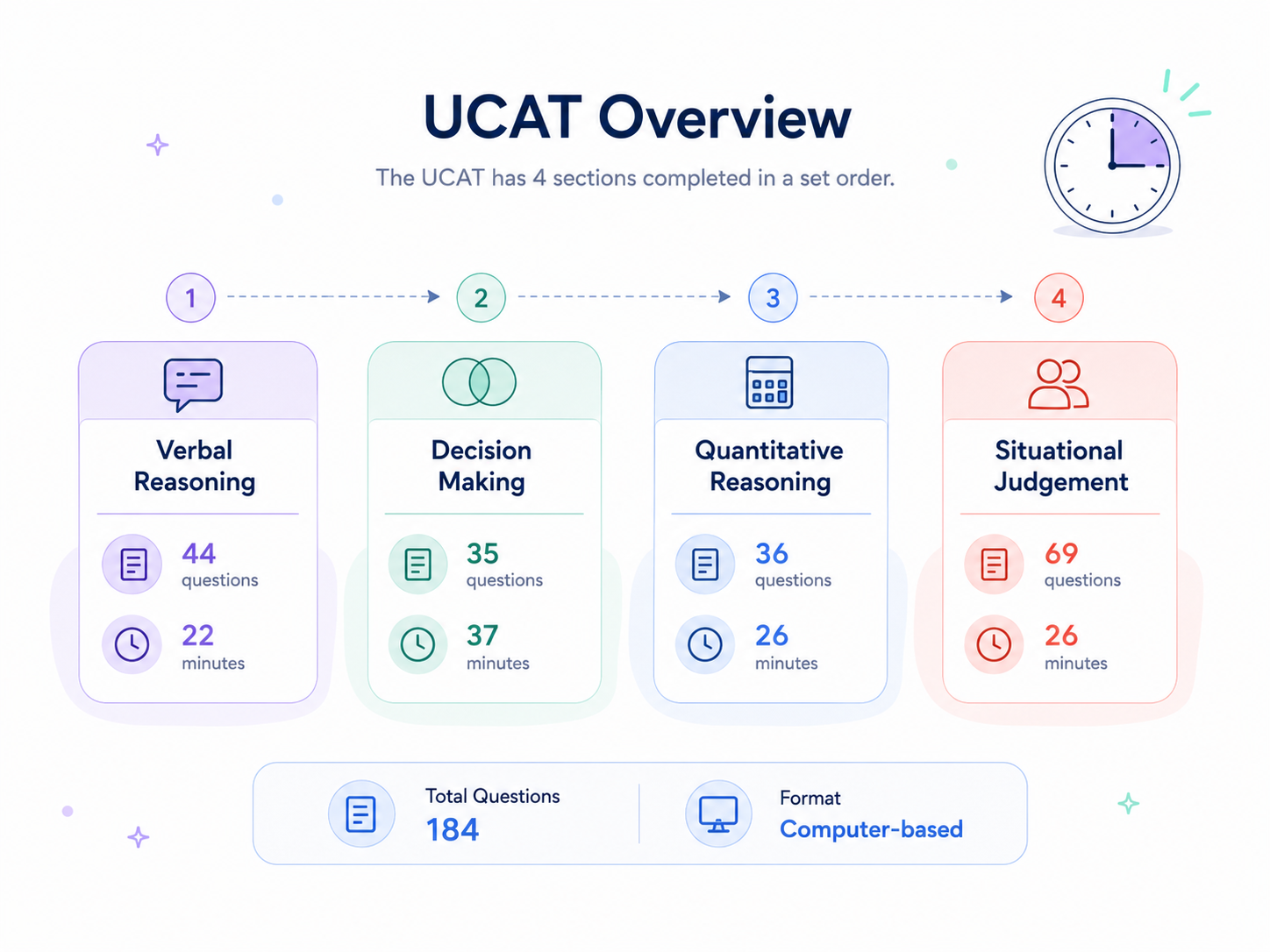
The test uses computer-based question formats where you select responses on screen.
Can I revise for the UCAT?
Yes. You can improve familiarity, technique, timing and accuracy through practice.
How early should I start?
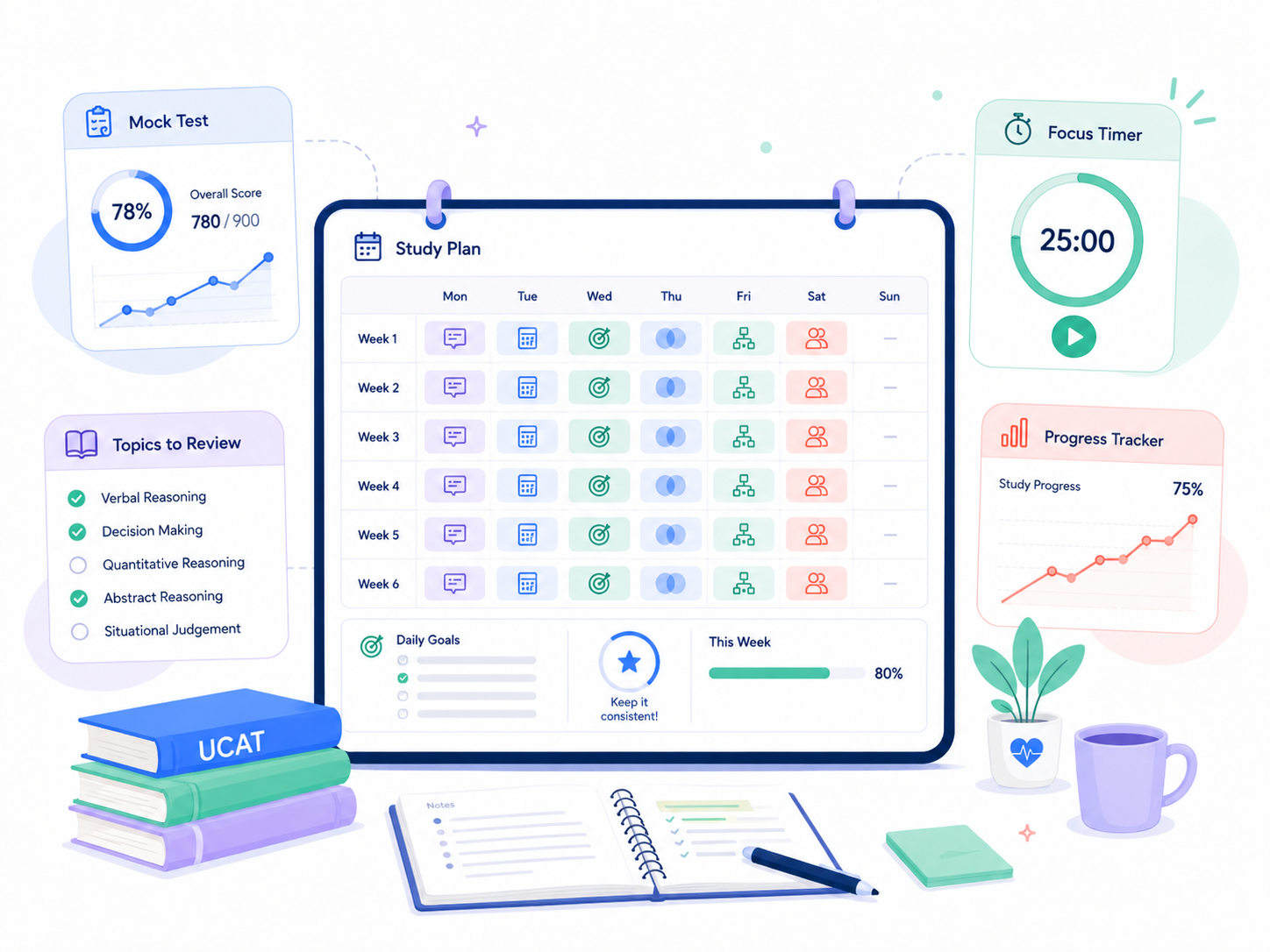
Start early enough to learn the question types, practise your weaknesses and complete timed work without rushing the whole process.
Should I do a mock on day one?
You can use a baseline, but a full mock is not always the best first step. Short section samples may be more useful initially.
Which UCAT section is hardest?
That depends on the student. Many find Verbal Reasoning difficult because of timing, while others struggle more with Decision Making or QR.
Is QR advanced maths?
No. The challenge is applying fairly basic maths quickly and accurately to data.
Is SJT just common sense?
Not completely. Good answers reflect safety, professionalism, honesty, confidentiality, teamwork and appropriate escalation.
Should I read every VR passage fully?
Not necessarily. Many students use a targeted scanning approach.
Are Venn diagrams important in DM?
They can be very useful both for dedicated Venn questions and for visualising set logic.
Should I use the calculator for every QR question?
No. Mental maths is often faster for simple calculations.
How many questions should I do per day?
Enough to practise effectively without sacrificing review. Quality matters more than raw volume.
How many mocks should I do?
There is no perfect number. Use enough to build stamina and timing, but review each one properly.
Should I review correct answers?
Yes, especially if you guessed or took too long.
What if my scores are not improving?
Look at subtypes, timing and repeated mistakes. A plateau often means your practice needs to become more targeted.
What if my scores drop?
Check difficulty, fatigue and recent workload before panicking. One bad result does not define your progress.
Should I practise untimed?
Yes when learning a new method. Add timing once the method is reliable.
How do I improve timing?
Use better methods, practise moving on and analyse slow question types.
How do I improve accuracy?
Review repeated mistakes and use quick targeted checks rather than rereading everything.
Is guessing bad?
No. Strategic guessing is part of good time management.
Can I prepare without a tutor?
Yes. A clear plan, good resources and honest review can support strong independent preparation.
What should I do the day before?
Keep revision light, organise practical details and prioritise rest.
What should I do if I panic in the test?
Move on from the difficult question, reset and focus only on the next task.
What is the most important UCAT revision habit?
Reviewing mistakes properly is one of the most valuable habits because it tells you exactly what to improve next.

Putting It Into Practice
The UCAT becomes much less confusing once the basic questions are answered. From there, your job is simple: practise, review, adjust and keep going.