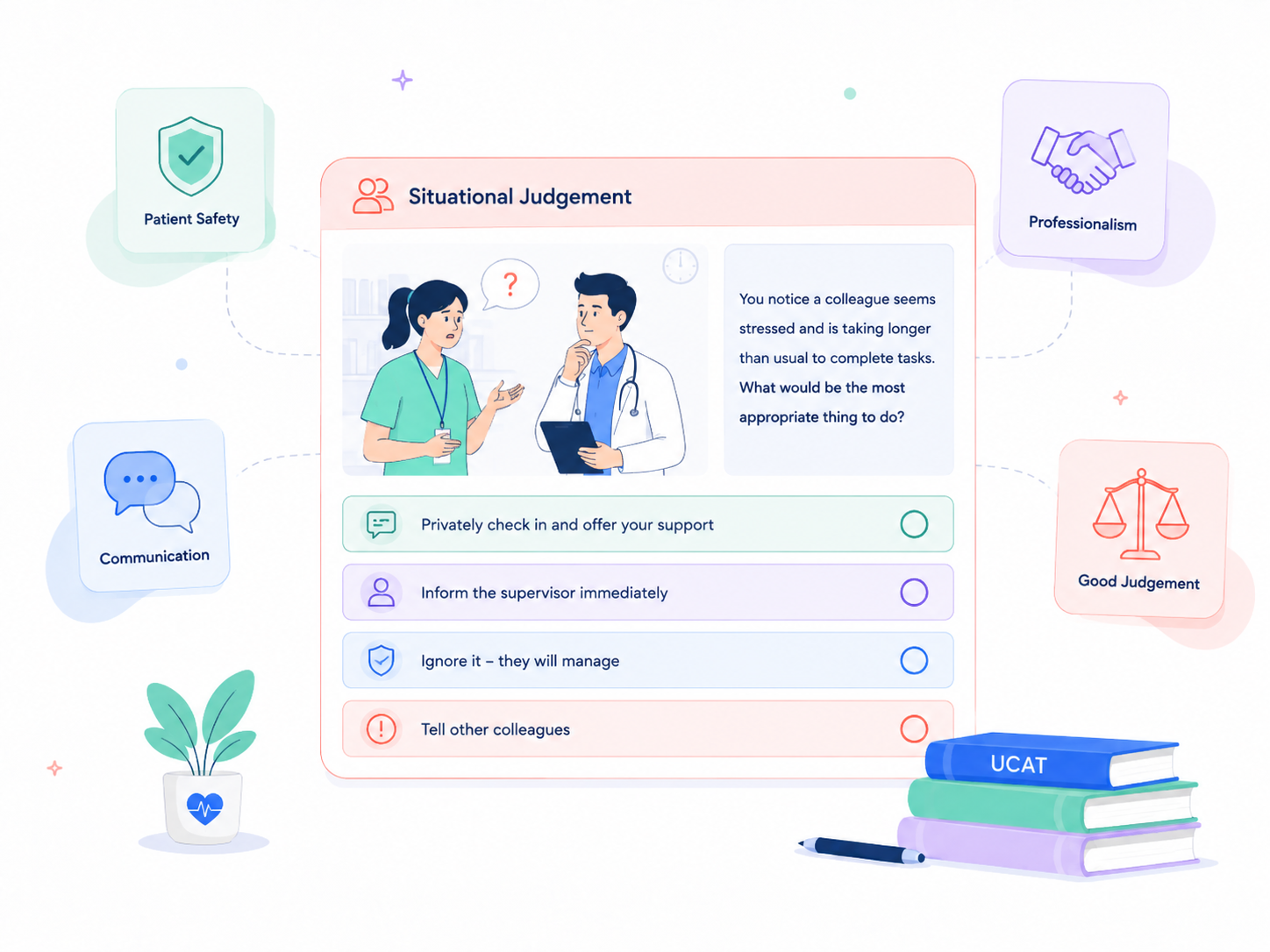
Situational Judgement improves when you stop memorising individual answers and start understanding the principles underneath them.
The same themes appear repeatedly: safety, honesty, communication, confidentiality, teamwork, respect and knowing your limits.
If a situation involves immediate risk, safety usually comes first.
If a mistake has happened, hiding it is rarely appropriate. Honesty and appropriate escalation matter.
If private information is involved, confidentiality matters unless there is a serious reason to share information with the correct person.
If something is outside your competence, asking for help is stronger than pretending you know what to do.
Another key idea is proportionality. Not every problem needs the harshest response. Some situations should be handled quietly and directly first. Others need senior support immediately because someone could be harmed.
When reviewing SJT questions, ask which principle the scenario is testing.
Do not just write down “A was correct”. Write down why.
For example:
- protects patient safety
- respects confidentiality
- escalates appropriately
- avoids gossip
- shows honesty
- stays within competence
This builds a reusable framework in your head.
It also helps to avoid choosing answers based on whether they feel kind or strict. The UCAT is not rewarding personality. It is rewarding appropriate professional judgement.
The more scenarios you review, the easier it becomes to recognise what matters most.