One of the first questions students ask is, “How long should I revise for the UCAT?” It sounds like there should be one perfect answer, but there really is not. The best revision period depends on how much time you have, how quickly you learn the question types and how consistently you can practise.
For most students, a focused block of several weeks works better than either extreme. Starting too late can make everything feel rushed. Starting far too early can lead to boredom and burnout before your test date even arrives.
The important thing is not just how many weeks you have. It is what you do with them.
A student who studies for six weeks with a clear plan, regular practice and proper review may make more progress than someone who “revises” for three months but only dips in and out of questions.
A useful way to think about preparation is in three stages.
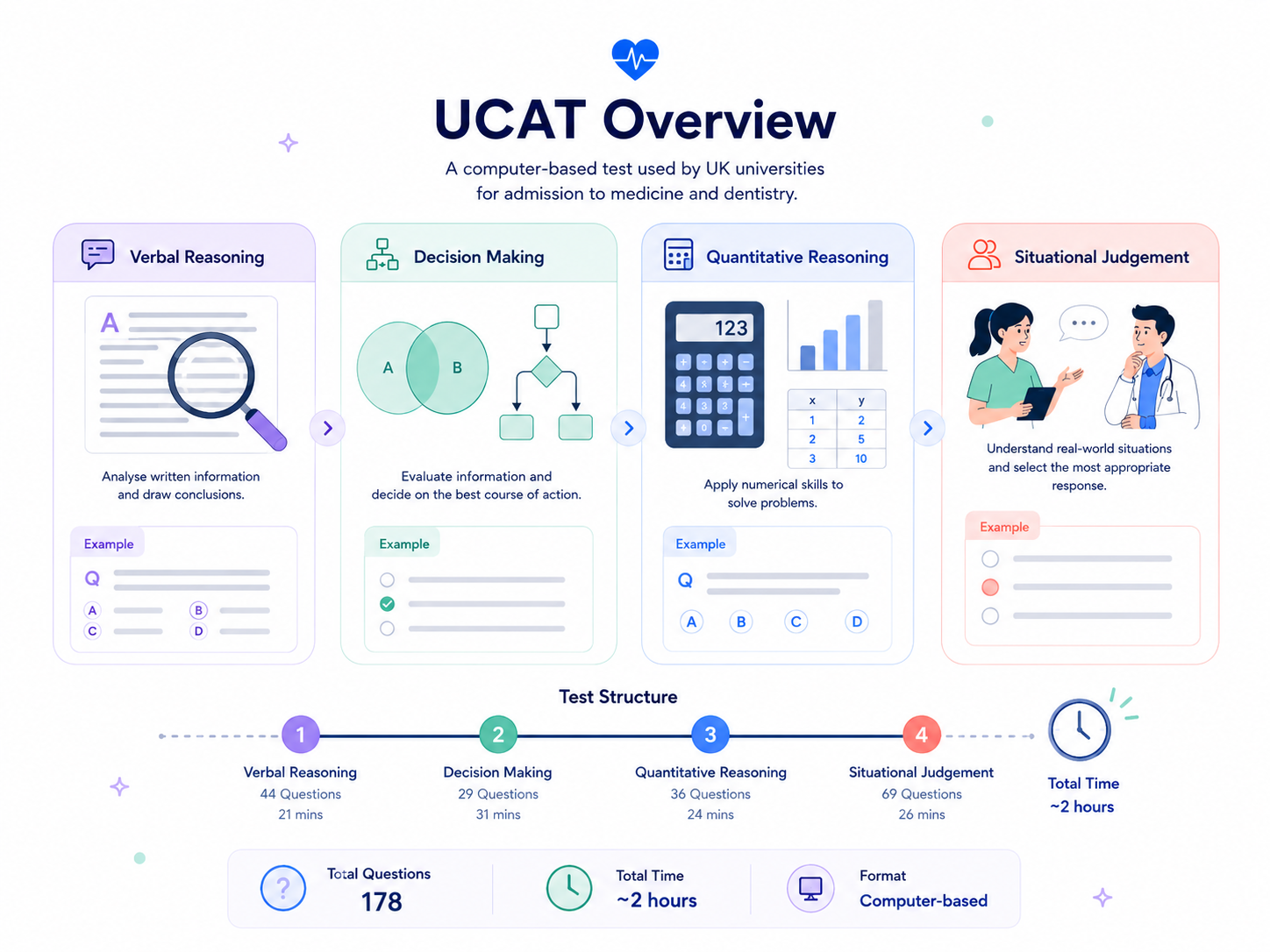
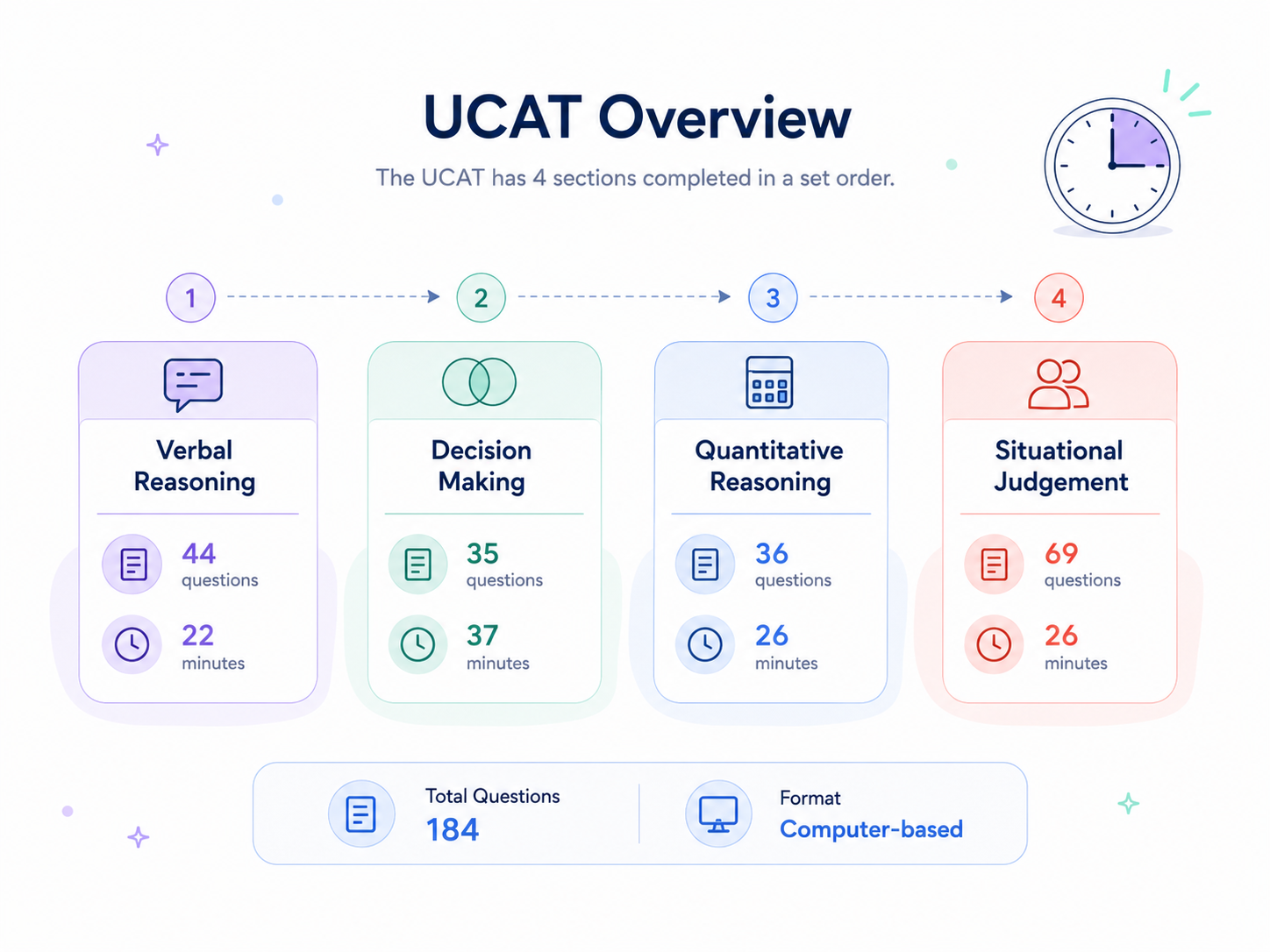
The first stage is learning the test. This is where you get familiar with Verbal Reasoning, Decision Making, Quantitative Reasoning and Situational Judgement. You learn the question styles, understand the timing and work out where your weak areas are.
The second stage is targeted practice. This is where you stop treating every topic equally and spend more time on the things that are actually costing you marks. You might focus on True, False, Can’t Tell in Verbal Reasoning, Venn diagrams in Decision Making or percentage changes in Quantitative Reasoning.
The third stage is timed work and mock practice. Once you understand the question types, you need to prove that you can apply those skills under real time pressure.

Putting It Into Practice
If you are wondering whether you have “enough time”, avoid panicking about the calendar. Instead, look at your current level and what needs to improve. A shorter preparation period can still work well if you are organised. A longer period is only useful if you use it properly.
You should also avoid measuring progress only by hours. Two focused 45-minute sessions can be much more useful than three distracted hours with your phone beside you.
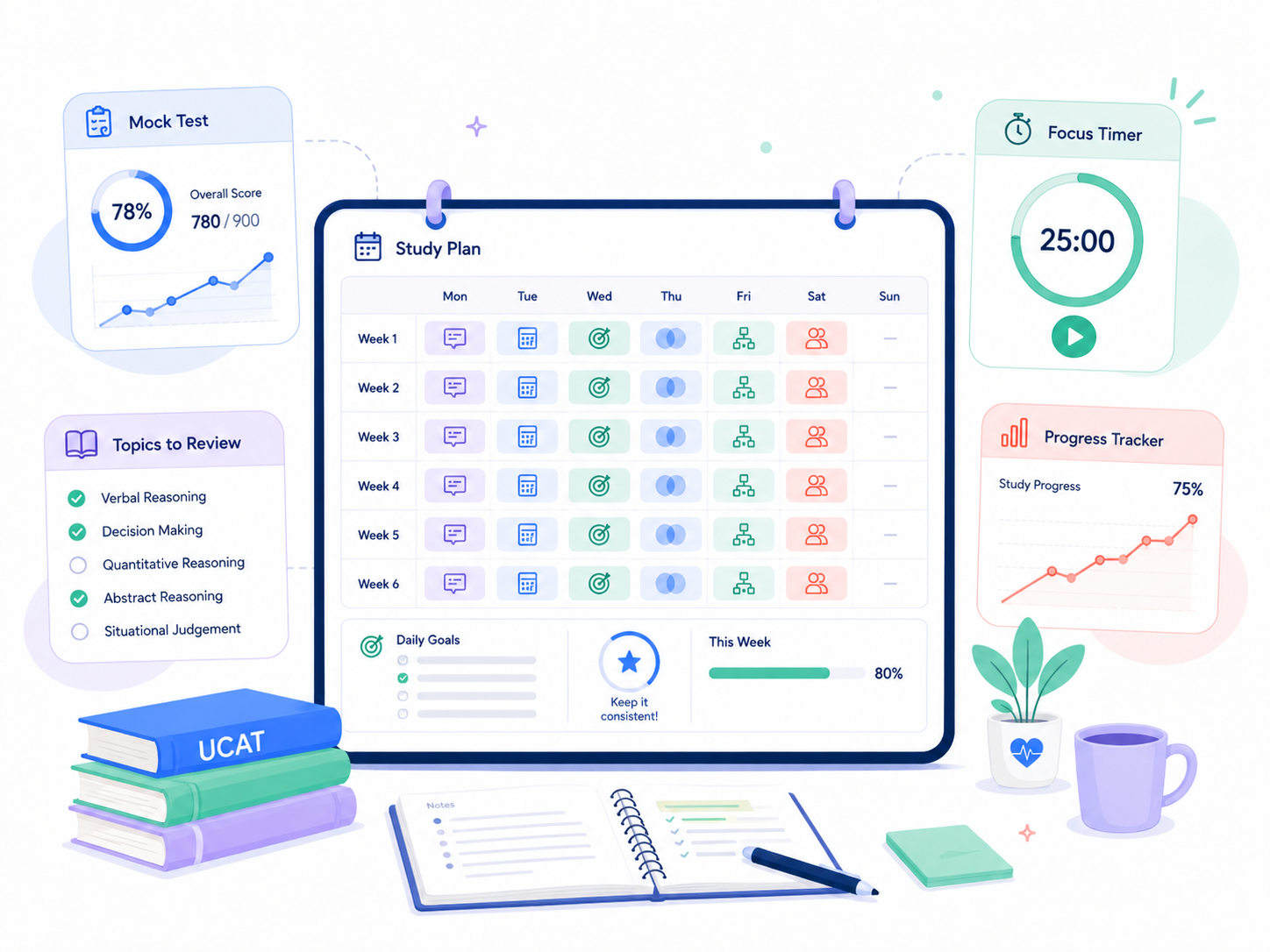
A realistic study week might include several shorter section-specific sessions and one longer review or mock session. That gives you regular contact with the exam without making your whole summer feel like one endless revision block.
Another useful rule is to leave yourself enough time to make mistakes. The first few practice sets are not meant to be perfect. You need space to discover what goes wrong, fix it and try again. If your first full mock is two days before your test, you have very little time to act on what it teaches you.
If your test is still several weeks away, focus on building strong habits. If it is closer, prioritise the areas where improvement is most realistic. You do not need to rebuild your entire approach overnight.
The best answer to “How long should I revise for the UCAT?” is this: long enough to learn the format, practise each section properly, review your mistakes and get comfortable with timed work.
The number of weeks matters. The quality of those weeks matters more.