A UCAT study plan only works if you actually follow it. That sounds obvious, but many students create beautiful revision timetables that look impressive and then collapse after a few days.
A strong study plan is not the most intense one. It is the one that is realistic, balanced and consistent.
Start by working out how much time you genuinely have each week. Be honest. If you are busy with school, work or other responsibilities, your plan needs to fit around real life. There is no point building a schedule that depends on you becoming a totally different person overnight.
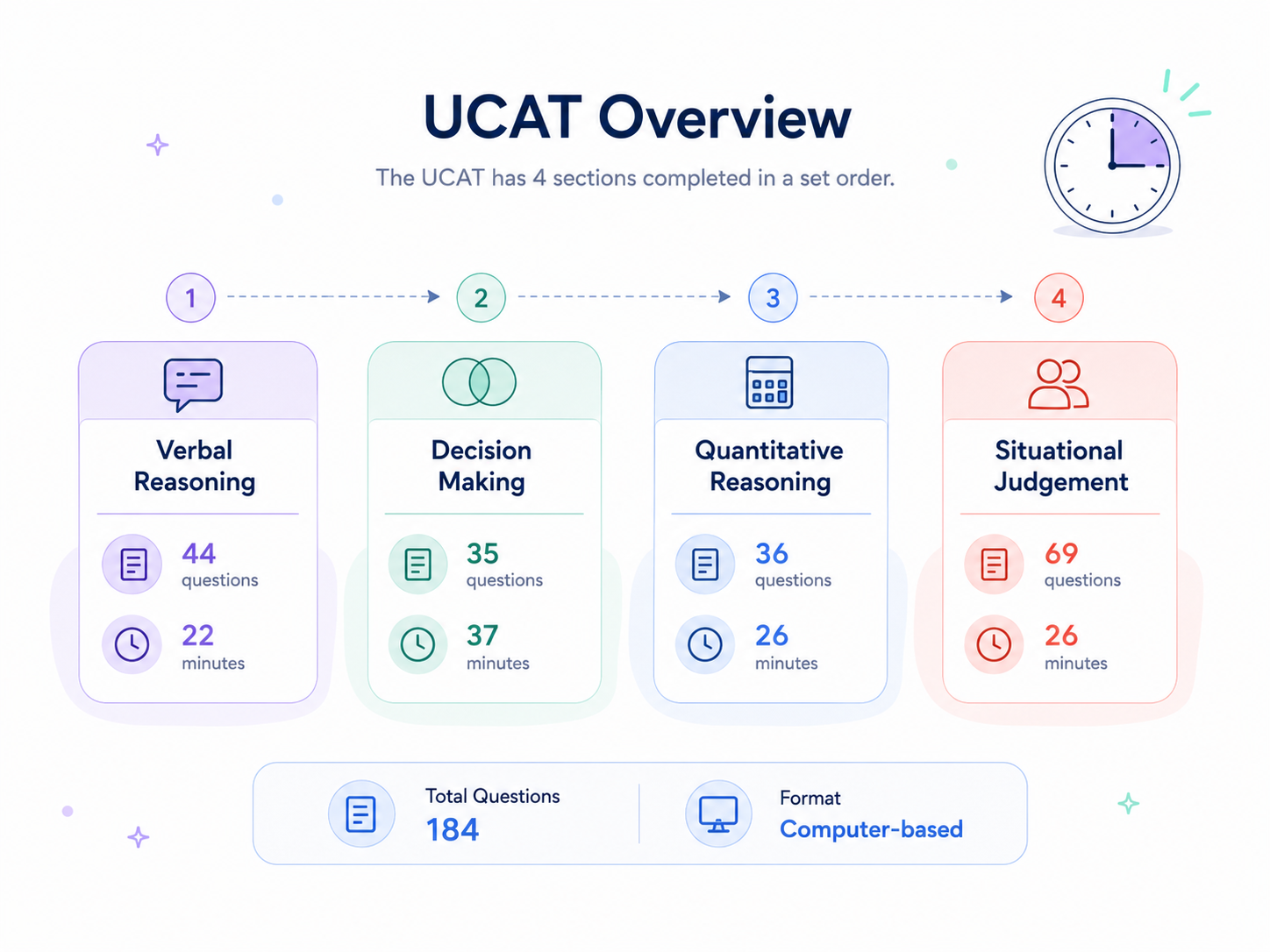
Next, divide your time across the four UCAT sections. In the beginning, it can help to touch all four regularly so you build familiarity. Once you know your weak areas, you can give those sections more time.
A simple weekly plan might include:
- one Verbal Reasoning session
- one Decision Making session
- one Quantitative Reasoning session
- one Situational Judgement session
- one mixed or review session
That is already a solid foundation.
Your plan should also include more than just question practice. You need time to review your errors. This is where real improvement happens. A student who does 100 questions and learns from them can improve more than a student who rushes through 300 questions and barely reflects.

Putting It Into Practice
It is also helpful to include small goals. Instead of vague aims like “get better at UCAT”, give yourself clear targets such as:
- complete one timed QR set
- review five incorrect VR questions
- practise ratios and percentages
- learn how to answer True, False, Can’t Tell
- complete one SJT scenario review
Small goals are easier to act on, and that makes consistency more likely.
You should build in mock tests too, but not too early. Many students rush into full mocks before they understand the question types. That often leads to poor-quality practice and unnecessary panic. It is usually better to learn the basics first, then begin timed sets, then move into full mocks.
Another good tip is to make your plan flexible. If a week goes badly, do not throw the whole plan away. Adjust it and keep going. A missed session is not a disaster. Giving up completely is the real problem.
A good UCAT study plan should help you feel more organised, not more guilty. If your timetable makes you feel crushed before you even start, it probably needs simplifying.
Keep asking: can I realistically do this? Can I repeat it next week? Can I still review properly? If the answer is yes, you are probably on the right track.
Consistency beats perfection almost every time. A study plan you can stick to for weeks is far more useful than a perfect-looking plan you abandon after three days.