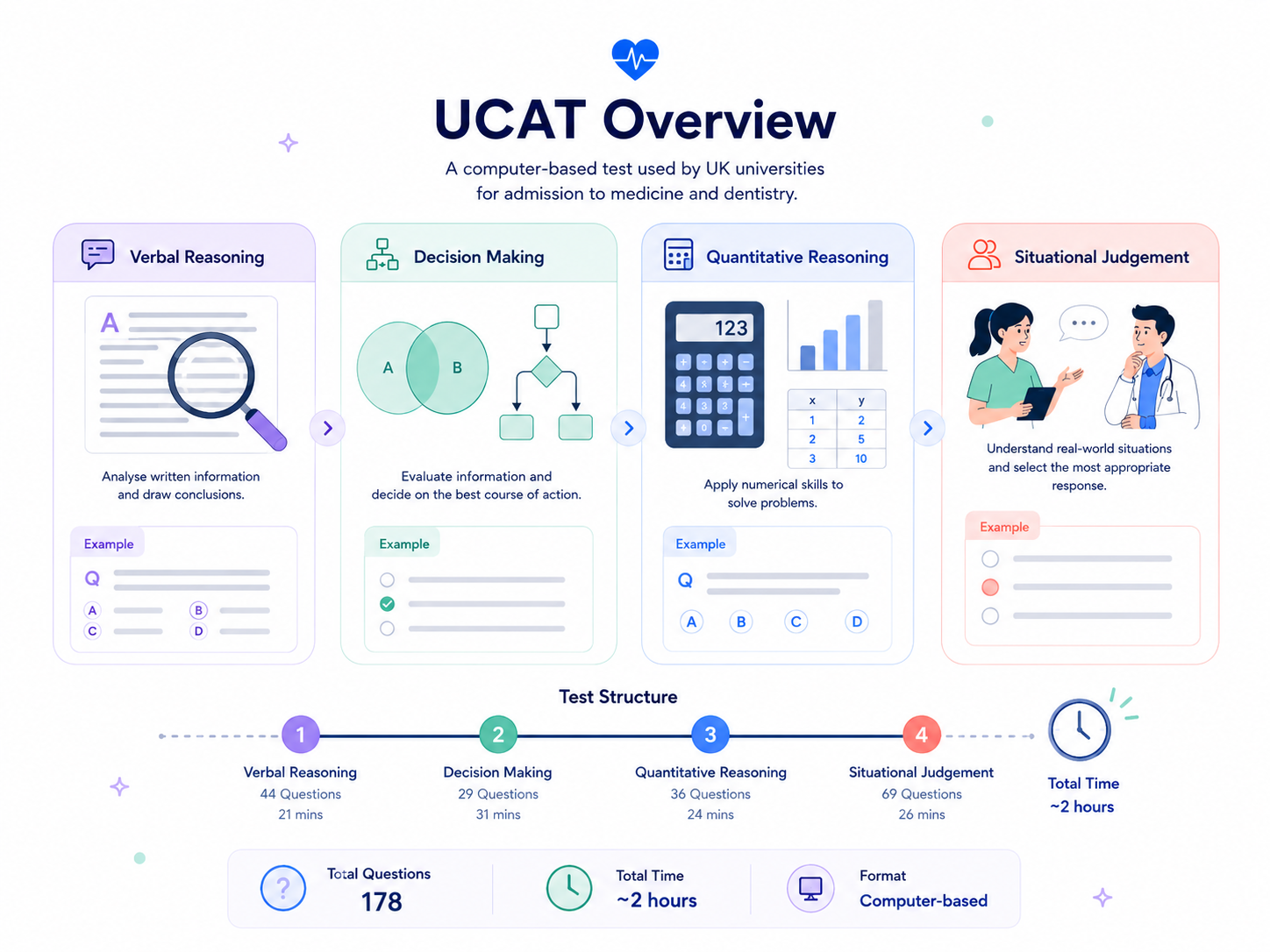
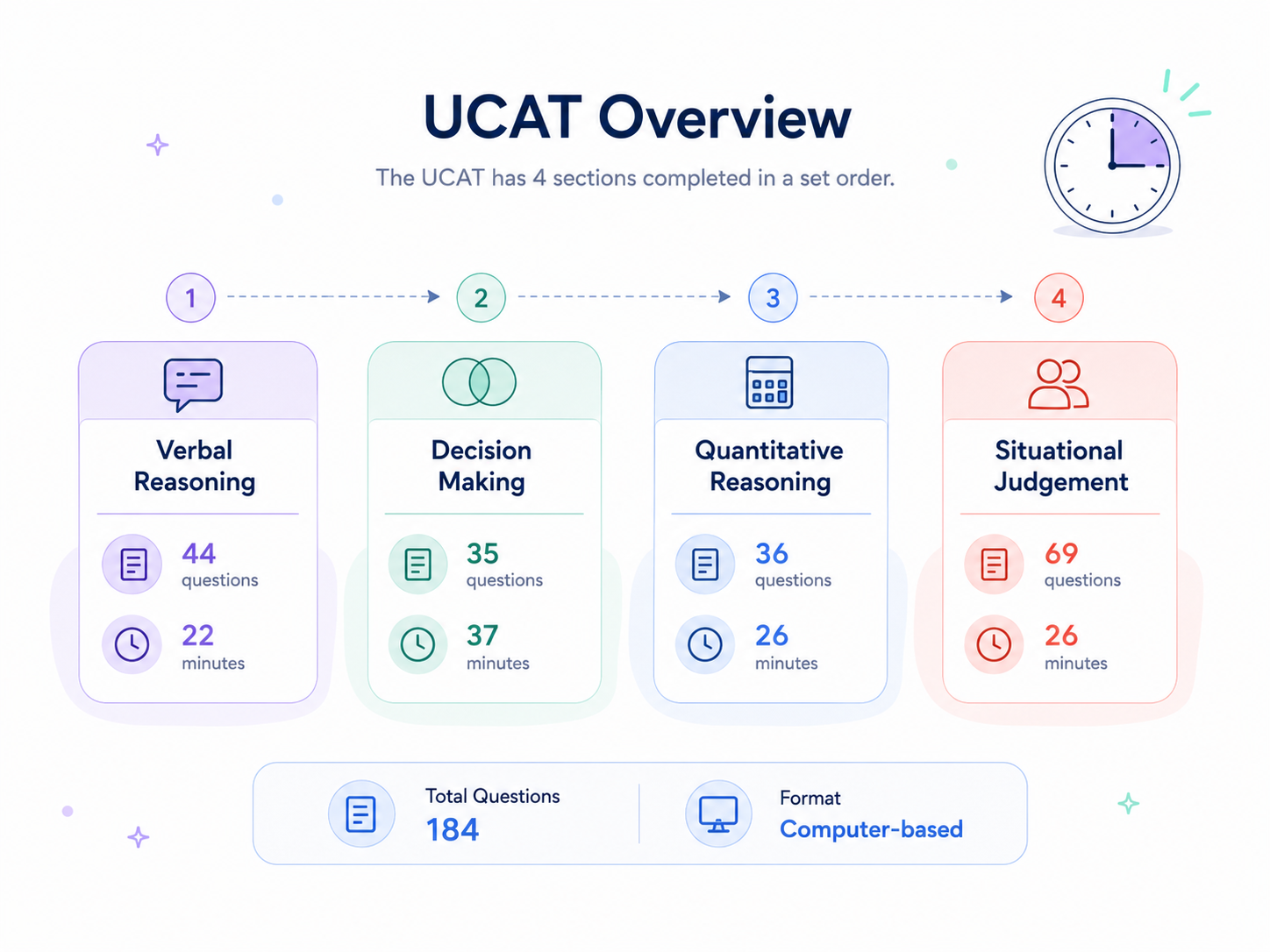
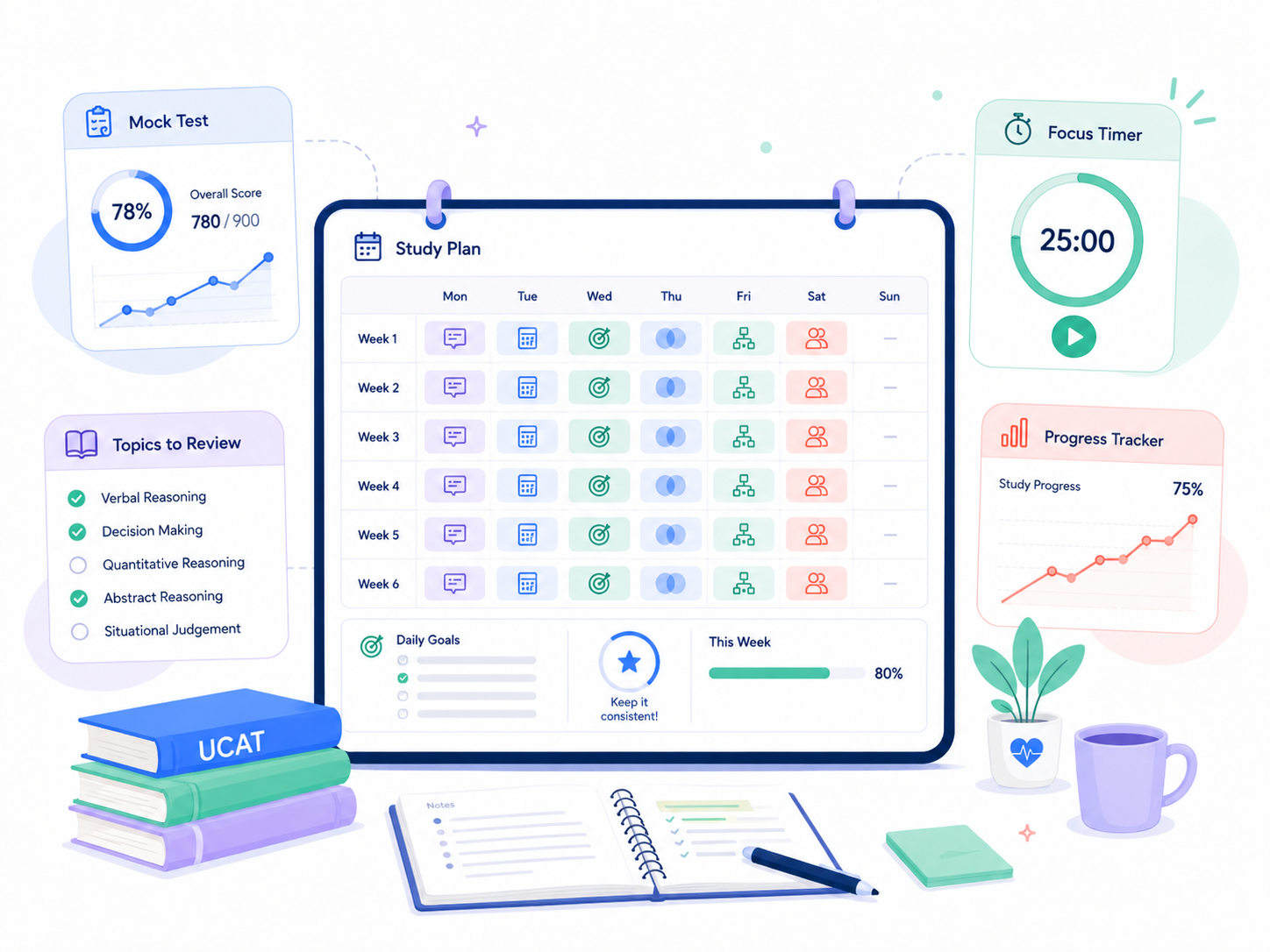
Mock tests are one of the most useful parts of UCAT preparation, but they are most useful at the right time.
If you start full mocks before you understand the question types, you may spend a lot of time proving that you are not ready yet.
That is not especially helpful.
A better approach is to build the skills first.
Learn the four sections. Practise the common question types. Do short timed sets. Then introduce full mocks once you can actually learn from the overall performance.

Putting It Into Practice
Your first mock does not need to be impressive. Its job is to show you how the test feels when everything is combined.
After that, the review matters more than the score.
Look at which sections dropped under time pressure. Notice whether concentration fell later in the test. Check which question types repeatedly caused problems.
You also do not need to do a full mock every day. That can lead to fatigue and shallow review.
Mocks are best used as checkpoints.
Between mocks, go back to targeted practice and fix what the last one exposed.
A useful pattern is:
mock → review → targeted practice → next mock
That turns every mock into a learning cycle rather than a score-chasing exercise.
Start mocks when you know the basics well enough for the result to teach you something useful.